Contact:
info@dailynewstech.com
seo@dailynewstech.com
pr@dailynewstech.com
ads@dailynewstech.com

Why Learning AI Is the Real Career Advantage in 2026

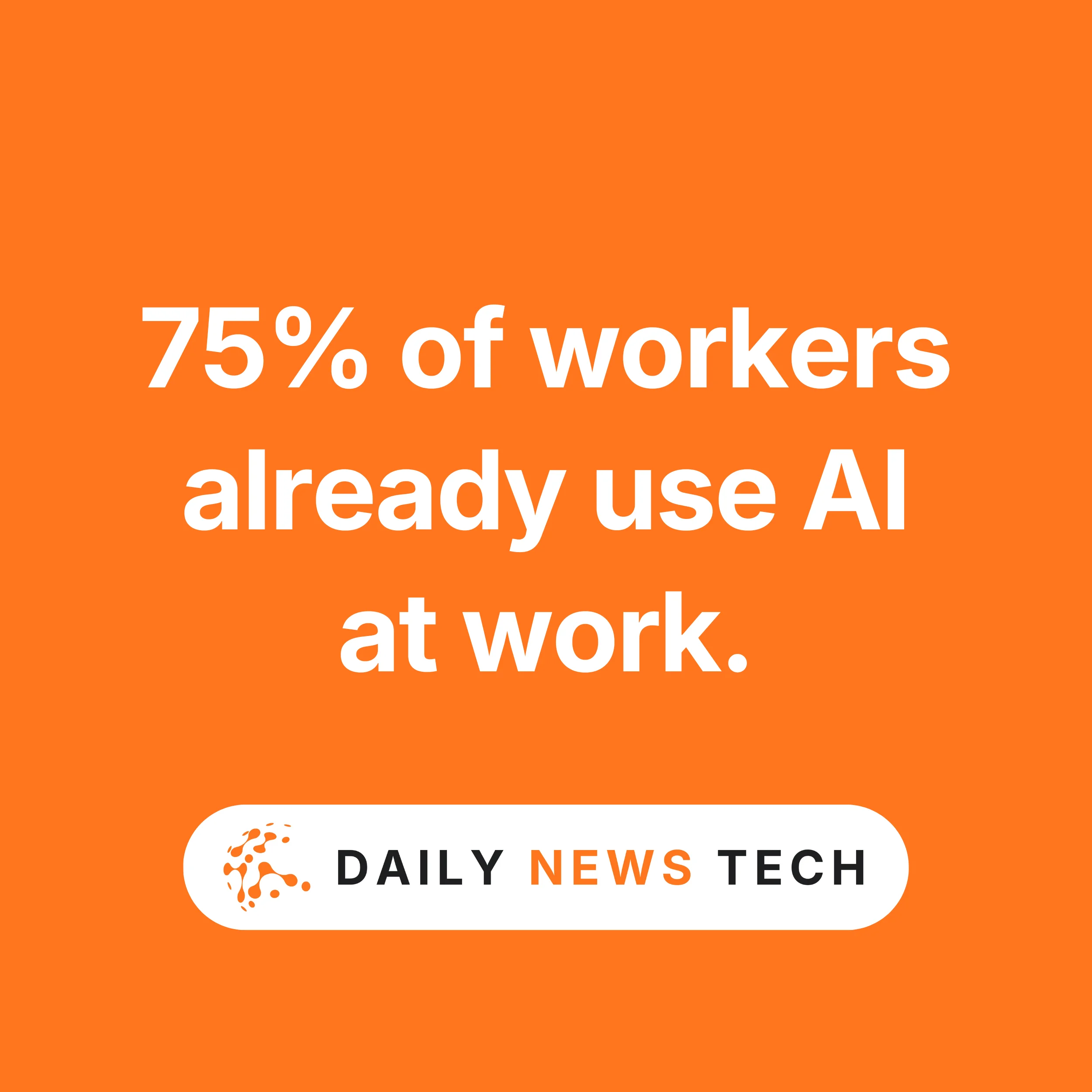
Seventy-five percent of workers are already using AI on the job. That statistic alone should stop most people mid-scroll, but the number isn’t actually the story.
The story is what the other 25% are about to find out the hard way: the gap forming right now isn’t between people who use AI and people who don’t. It’s between people using it to save ten minutes, and people using it to build things they couldn’t have built alone.
The Time-Saving Trap
Most people’s first encounter with AI at work is transactional: summarize this email, clean up this paragraph, save me twenty minutes. That’s a real benefit. It’s also the smallest one available.
Treating AI purely as a time-saver caps its value at the size of the task you hand it. The bigger shift happens when a single idea stops being limited by how much time one person has to execute it, when one concept can become a full presentation, a marketing campaign, a working prototype, or an entire product, all inside a timeframe that used to require a team.
What’s Actually Being Learned Isn’t a Tool
Calling this “learning AI tools” undersells what’s happening. The people pulling ahead right now aren’t memorizing prompts, they’re absorbing a different way of approaching a problem: start from the idea, iterate fast, let the machine handle the mechanical execution, and spend your own judgment on the parts that actually require it.
That shows up as three compounding gains: more speed, because iteration cycles collapse from days to minutes; more creative range, because testing ten directions costs the same as testing one used to; and sharper problem-solving, because more attempts means more chances to find the approach that actually works.
Every Technology Shift Splits People Into Two Groups
This isn’t a new pattern, it’s the same one that played out with the internet, with spreadsheets, with the smartphone. Every major shift in working tools creates two camps: the people who wait to be convinced, and the people who start experimenting before the case for it is even fully made.
The second group is always smaller at the start. It’s also, every single time history has run this experiment, the group that ends up setting the pace for everyone else.
AI Won’t Replace You. Someone Using It Well Might.
The fear that AI simply replaces workers misses what’s actually happening in most workplaces. The realistic version is narrower and, honestly, more urgent: AI does not replace people, but people who’ve learned to combine their own judgment with AI’s leverage have a real, compounding advantage over people who haven’t.
That advantage isn’t about producing more output for its own sake. It’s about producing more value, connecting ideas faster, testing more directions, and shipping things that used to need a bigger team and a longer runway.
The Case for Spending Your Free Time Here
Anyone spending their evenings and weekends genuinely learning how to build with AI, not just poking at a chatbot, but figuring out how to turn an idea into something real with it, is doing something easy to underestimate and hard to catch up to later. Those hours compound. The skills being built now are the ones that will still matter five years from now, long after today’s specific tools have been replaced by better ones.
Frequently Asked Questions
What percentage of workers currently use AI at work?
Recent data cited in industry discussion puts the figure at roughly 75% of workers already using AI in some form on the job.
Is AI’s main benefit really just saving time?
Time savings are the most visible benefit, but the larger value is expanding what a single person can create, turning one idea into a presentation, campaign, or product far faster than before.
Will AI replace human workers?
The more accurate framing is that AI won’t replace people outright, but people who learn to combine human judgment with AI tools will have a significant advantage over those who don’t.
What’s the best way to build an AI skills advantage?
Treat it as learning a new way of thinking and creating, not just memorizing a tool, practical, hands-on experimentation with real projects builds the advantage faster than passive learning.