Contact:
info@dailynewstech.com
seo@dailynewstech.com
pr@dailynewstech.com
ads@dailynewstech.com

Why ‘Best X’ Lists Drive Nearly Half of All AI Citations

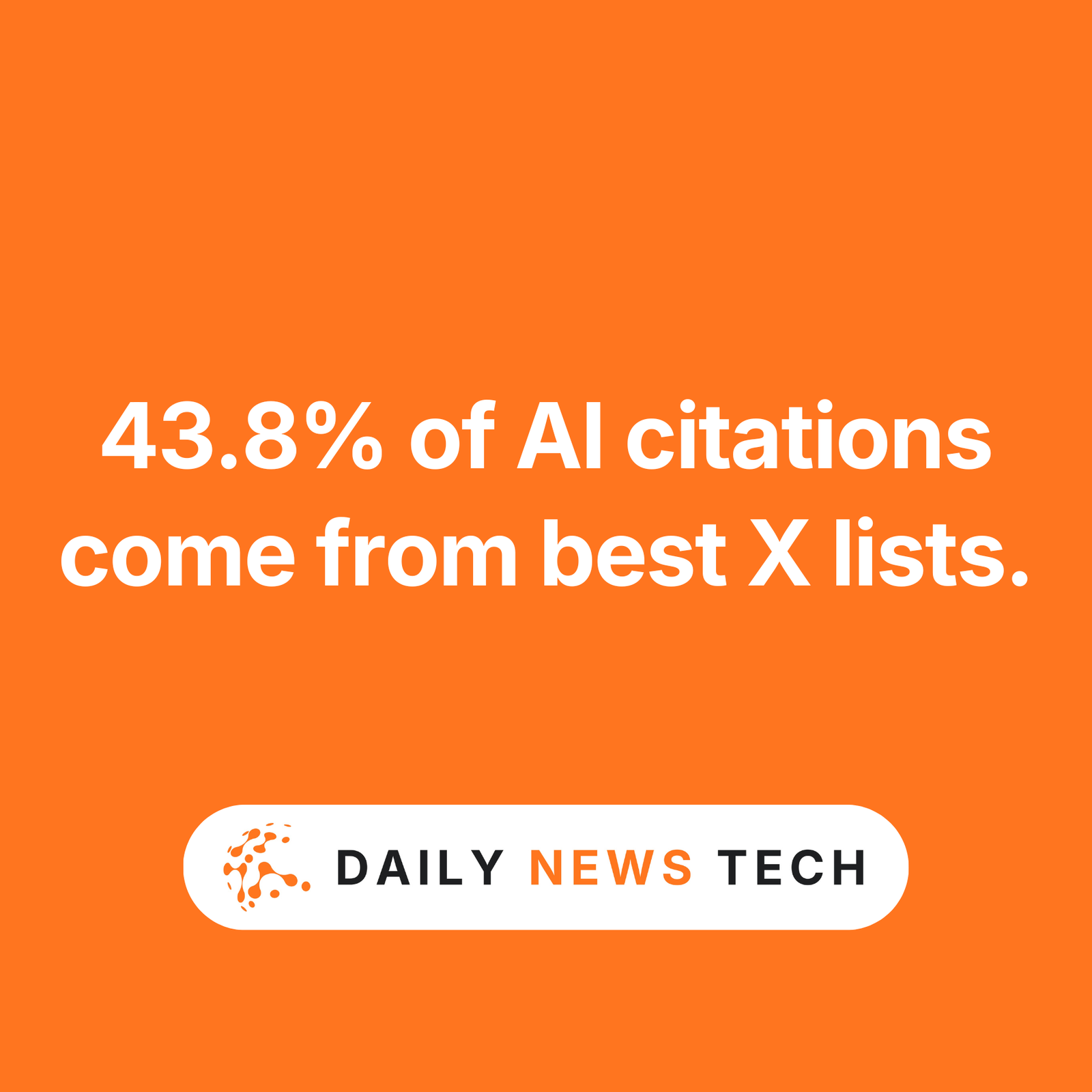
According to data cited in a recent industry analysis, 43.8% of AI citations come from best X list pages, a figure that outweighs blog posts, landing pages, product pages, and homepages put together. If that number holds, it reframes what AI visibility actually requires: not just a well-optimized website, but a real presence on the third-party pages AI already trusts enough to cite.
Here’s the playbook behind that number, broken into the moves brands can actually make.
1. Third-Party Recommendations Outweigh Self-Description
A homepage is a brand’s own account of itself. A third-party comparison page is somebody else’s account, and AI systems cite the second kind far more often. That distinction is the entire premise behind this shift: AI visibility increasingly depends on what other sites say about a brand, not what the brand says about itself.
2. Find the Lists AI Already Trusts
AI models generally aren’t discovering brands from a blank slate. They’re surfacing brands through recommendation content that’s already ranking and already earned enough trust to be cited repeatedly. The practical task is identifying which existing list and comparison pages are already feeding AI citations in a given category, then working to get included on them.
3. Position Matters More Than Inclusion Alone
Simply appearing on a best X list helps. Appearing near the top helps considerably more. Brands positioned higher in these lists tend to show up more prominently in AI-generated recommendations, which makes list placement a metric worth tracking on its own, separate from just tracking whether a brand is mentioned at all.
4. Publish List Pages of Your Own
A notable pattern among brands that show up often in AI recommendations: many of them are publishing their own list-style content, including best-of roundups, alternatives pages, and direct comparison pages. Owning this content format isn’t just about being featured elsewhere. It’s about building the same kind of page other sites and AI systems already trust.
5. Freshness Signals Trust
Roughly 80% of cited list pages have been recently updated, suggesting that freshness itself functions as a trust signal for AI systems deciding which recommendation pages to pull from. A best X page published once and left untouched for years is a weaker candidate for citation than one that’s visibly maintained.
6. Domain Authority Isn’t the Whole Game
A meaningful share of cited list pages come from relatively smaller websites, not just the largest, highest-authority domains in a category. The implication is that AI systems reward relevance to the specific query at least as much as they reward overall site authority, which opens the door for smaller, focused publishers to earn citations that a pure domain-authority model would predict should go to bigger sites.
7. Consensus Beats a Single Mention
One recommendation reads as an opinion. The same recommendation repeated across multiple independent, trusted sources starts to function as a signal. Building AI visibility isn’t about landing one great placement. It’s about accumulating enough independent mentions that the pattern itself becomes evidence.
8. Reverse-Engineer Where Competitors Get Recommended
AI visibility tends to cluster around the same recurring recommendation sources within a category. Identifying exactly where competitors are already being recommended is a direct way to find the specific pages worth targeting for a brand’s own inclusion.
9. The New Goal Isn’t Just Ranking Your Own Site
For most of SEO‘s history, the target was straightforward: rank your own website. That target hasn’t gone away, but a second one has emerged alongside it: ranking the third-party pages that recommend you. With close to half of AI citations coming from best X lists specifically, brands that treat this as a real, ongoing workstream rather than an afterthought are building an advantage that’s likely to compound for years.
Frequently Asked Questions
What percentage of AI citations come from best X lists?
According to the cited data, 43.8% of AI citations come from best X list pages, more than blog posts, landing pages, product pages, and homepages combined.
How can a brand get included on more best X lists?
By identifying which third-party comparison and recommendation pages already rank and earn AI citations in their category, then working to get featured on those specific pages rather than only optimizing their own website.
Does it matter where a brand is positioned within a list?
Yes. Brands positioned higher within a best X list tend to appear more prominently in AI-generated recommendations, so position within a list is worth tracking separately from simple inclusion.
Do only large, high-authority websites get cited by AI?
No. A notable share of cited list pages come from smaller websites, suggesting relevance to the specific topic matters at least as much as overall domain authority.
What is the second SEO goal beyond ranking your own website?
Ranking the third-party pages that recommend your brand, since a large share of AI citations come from external best X and comparison pages rather than a brand’s own site.